
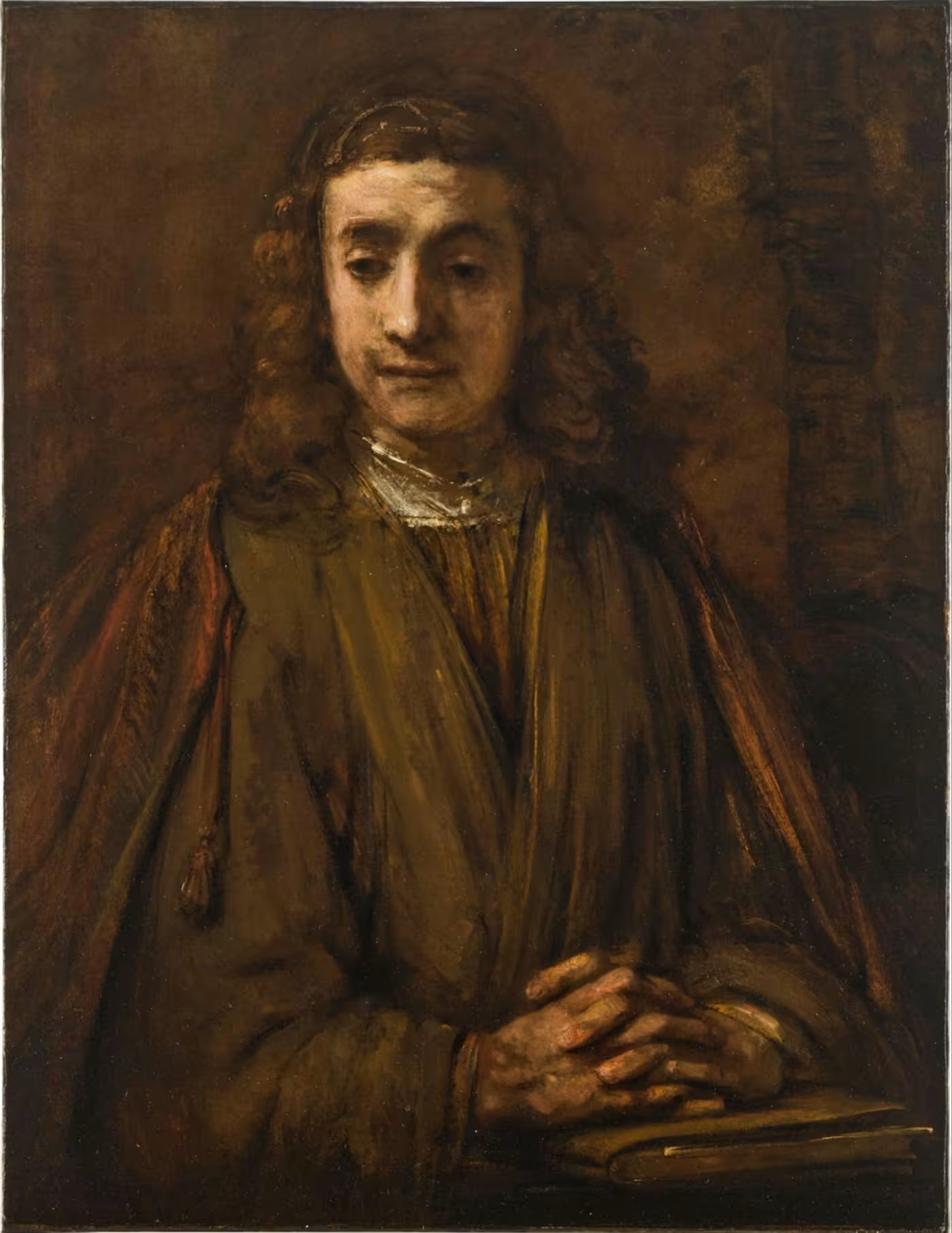
Such specialists are an endangered species but computer attribution is often wrong — and can be out by as much as a century
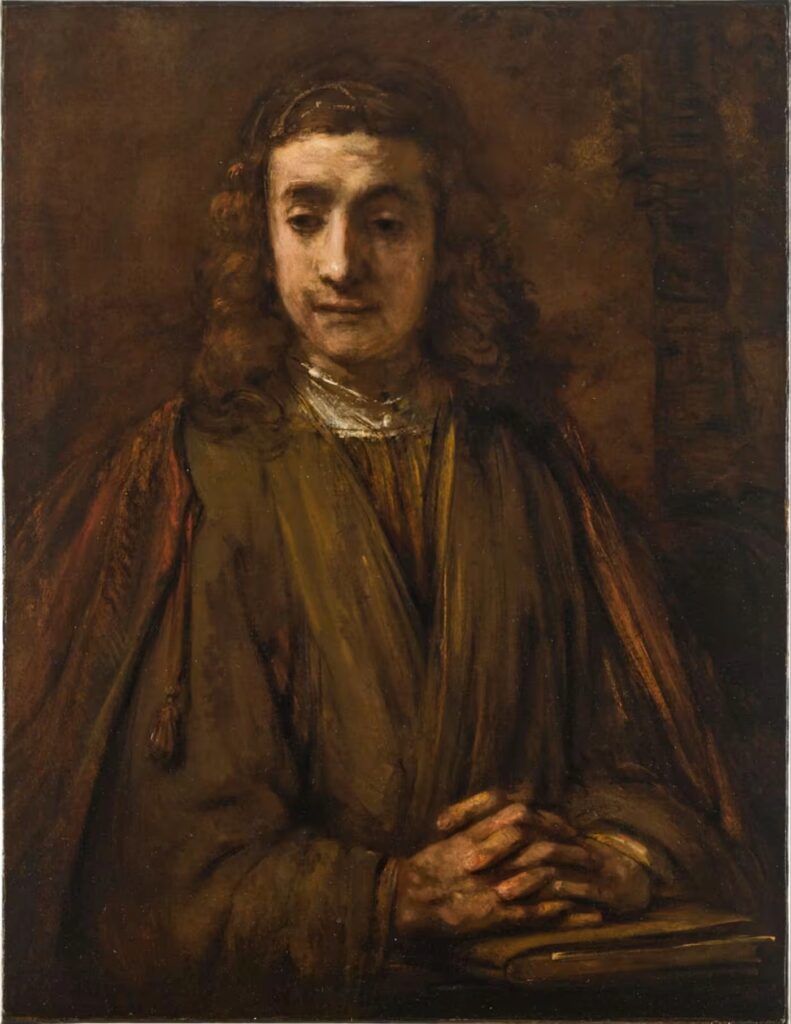
Rembrandt’s ‘Saint John on Patmos’ (c1660s) © Sotheby’s
Of all the professions threatened with extinction by artificial intelligence, I worry that mine will be one of the least missed: that of the art connoisseur. We are the people who, by some apparently secret skill, can glance at an old painting and declare confidently who painted it. We cloak our reasoning in mystical language. We live by discrimination and discernment, skills long cancelled by other disciplines. Even art historians dislike us.
In fact, art connoisseurship is already almost extinct. Until the 1980s, art history largely revolved around identifying who painted what. Art historians spent their careers building up mental databases of paintings by certain artists, allowing them to recognise similar traits in other paintings. Recognition is the essence of connoisseurship, and indeed the root of the word; from the Latin cognoscere, “to know”. The greatest accolade was to have “a good eye”.
But these older generations of connoisseurs are dying out. A surprising number of historically important artists now have no universally accepted expert, including figures such as George Stubbs and Thomas Lawrence.
How did this happen? You might think the ability to work out who painted a picture would be a foundational skill for art historians. But try finding an undergraduate art history course in the UK that teaches connoisseurship; you won’t. It is regarded as a suspect skill, practised by elitists making frowned upon “value judgments”. Today, most academic art historians assume we either already know who painted everything, or don’t need to.
Yet there are some areas of the art world where connoisseurship still matters. Museum visitors generally like to know that the right artist’s name is on the label. And the art market, for obvious reasons, aspires to attributional certainty.
Is such certainty possible anymore? Sotheby’s Old Master sale in London next week features a newly discovered Rembrandt of St John. It is a late work from the 1660s, sparingly but spiritedly painted. The model is Rembrandt’s son, Titus. The estimate, £5mn-£7mn, reflects Sotheby’s conviction that it is indeed by Rembrandt. I like it.
Read the catalogue, however, and you’ll see that the painting’s status has been uncertain for a century. It was last published as “a Rembrandt” in 1926, before sinking into obscurity in Argentina. Not unreasonably, anyone tempted to spend at least £5mn on such a painting wants to know if it is indeed by Rembrandt. How can we really know?
Until recently, there were plenty of Rembrandt specialists to whom collectors would turn for an answer. The greatest Rembrandt connoisseur of modern times was Professor Ernst van de Wetering, head of the Rembrandt Research Project for three decades. It took a lot to persuade him that a painting might be by Rembrandt (believe me, I tried), and the market trusted his judgment.
Unfortunately, van de Wetering died in 2021. No successor to his Rembrandt Research Project has yet emerged. For a while it looked as if the Rijksmuseum in Amsterdam would become the guardian of Rembrandt’s oeuvre, but it has proved reluctant. Moreover, most museums now forbid curators from giving opinions at all. Sotheby’s has had private scholarly backing for its discovery, but cannot cite anyone publicly in its catalogue.
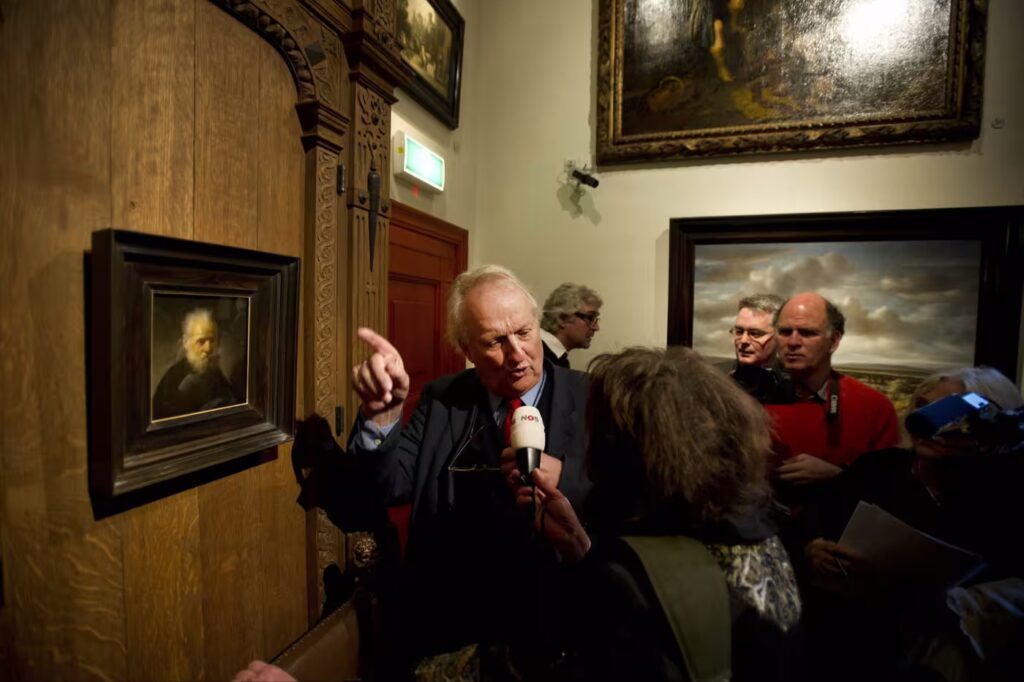
The late Rembrandt expert Ernst van de Wetering, giving an interview about a previously unknown painting by the Dutch artist at the Rembrandt House museum in Amsterdam, 2011 © Olaf Kraak/EPA/Shutterstock
So, caveat emptor? There is always an element of buyer beware in the Old Master market. It’s one reason prices don’t reach the heights of modern art. As it happens, Sotheby’s in-house Rembrandt specialist George Gordon makes a convincing case for Rembrandt’s authorship of the St John. And, helpfully, analysis of the ground layer — the priming between canvas and paint — reveals that it is made of a mix of quartz-clay unique to Rembrandt’s workshop. Good luck if you’re bidding.
If human connoisseurs are such an endangered species, then surely it is time to embrace AI? Several AI companies already promote themselves as objective, data-driven attribution machines, some charging thousands of pounds for “certificates of authenticity”.
From what I have seen, these AI connoisseurs are not very good. I regularly get emails from people saying their painting is by (say) Turner, enclosing their AI certificates. I have to tell them they have wasted their money. Sometimes, the attribution isn’t just wrong, it’s not even in the right century.
The Rembrandt example helps us understand why. First, there is the question of input. How do we know we are giving the AI a reliable dataset of Rembrandts? During the 20th century, Rembrandt’s accepted oeuvre fluctuated from almost a thousand paintings to fewer than 250. Which number was right? Attribution is constantly shifting.
Second, old paintings have lived complicated lives. By the time Sotheby’s Rembrandt resurfaced, it had accrued layers of dirt, varnish, over-paint and extra strips of canvas, all masking the painting’s qualities. Good connoisseurs do more than just look at the surface of paintings, they see beneath it. Computers looking at jpegs cannot do this.
But forget my self-serving attempts to delay the arrival of our AI overlords. The real reason we should resist AI connoisseurship is that it would mean giving up the most critical, and most enjoyable, aspect of art history: looking. The big secret about connoisseurship is that anyone can do it. Sure, it takes time to feel confident about an artist’s technique. But after a while your reaction becomes almost instinctive. It’s really just vibes.
So next time you’re wondering if Rembrandt painted an old brown picture of a saint, don’t ask a connoisseur like me, and certainly don’t ask AI. Ask yourself. Trust your own eyes, not an algorithm — and help connoisseurship fight another day.
Source: https://www.ft.com/content/8f073fe5-21bf-4559-8965-5784bb36aba3
